

Our Services / Predictive Maintenance

The machine that keeps stopping
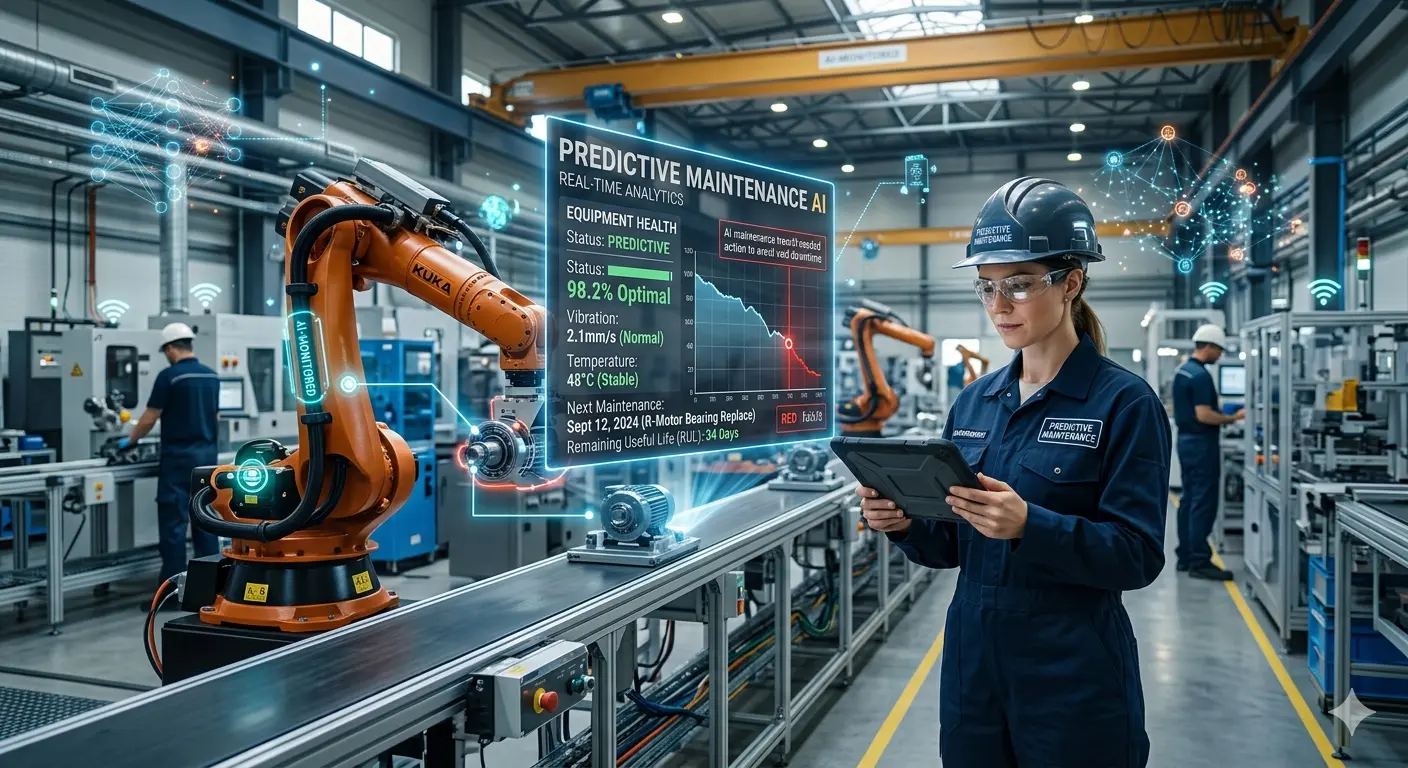
Every operation has one. It goes down every few weeks, always at the worst time, and everyone has a theory. Predictive maintenance is worth doing when a warning would actually change what you do — and worth skipping when it would not.
The first question
If you knew four days ahead, what would you do differently? If the part is on the shelf and the fix takes an hour, four days of warning is enormously valuable. If the part takes six weeks to arrive, a four-day warning tells you precisely when to start being annoyed. The useful warning horizon is set by your supply chain, not by the algorithm.
The second question: do you already have the data?
Usually more than people think. Machines with a PLC are often logging already. Maintenance records, even handwritten ones, tell us how often things failed and what was replaced. Energy meters catch a surprising amount — motors draw differently as bearings go. If none of that exists, a handful of clip-on sensors costs less than most people assume, but it means starting the clock: you need failures to learn from, and they happen on their own schedule.
How we phase it
The honest version
For a lot of smaller operations, the win is not a model. It is that maintenance history stopped living in a notebook and started being searchable. We will tell you if that is where your money is best spent.
Tell us which machine it is
We will tell you whether it is predictable.
How Predictive Maintenance Helps Different Industries
Predictive maintenance in AI solutions is a powerful tool that helps businesses across different industries improve operational efficiency, reduce costs, and enhance safety. By leveraging data analytics and artificial intelligence, businesses can predict equipment failures and address issues before they impact operations. As technology continues to advance, predictive maintenance will play an increasingly vital role in driving business success globally. With SmartNet LLC, learn how predictive maintenance in AI solutions helps businesses across different industries worldwide. Discover the benefits and applications of this innovative approach.
-
Manufacturing Industry
In the manufacturing industry, downtime can have a significant impact on production schedules and profitability. By implementing predictive maintenance, manufacturers can minimize the risk of unexpected equipment failures and ensure that production lines run smoothly. This results in improved productivity, reduced maintenance costs, and increased operational efficiency.
-
Transportation Industry
In the transportation industry, reliability is crucial for ensuring that vehicles and infrastructure are operating efficiently and safely. Predictive maintenance enables transportation companies to monitor the condition of their assets in real-time and identify potential issues before they escalate. This helps prevent breakdowns, reduce maintenance costs, and improve passenger safety.
-
Healthcare Industry
In the aIn the healthcare industry, equipment failure can have serious consequences for patient care. By using predictive maintenance, healthcare facilities can monitor the performance of medical devices and identify issues before they impact patient treatment. This allows healthcare providers to deliver high-quality care, minimize disruptions, and ensure patient safety.
-
Energy Industry
In the energy industry, downtime can lead to significant revenue losses and impact the reliability of power generation. By leveraging predictive maintenance, energy companies can monitor the condition of critical assets such as turbines, generators, and transformers. This enables them to schedule maintenance tasks proactively, reduce downtime, and optimize energy production.



Transform Your Business with SmartNet LLC
Intelligent automation, scalable AI systems, and innovative solutions built for growth.
Contact Us